
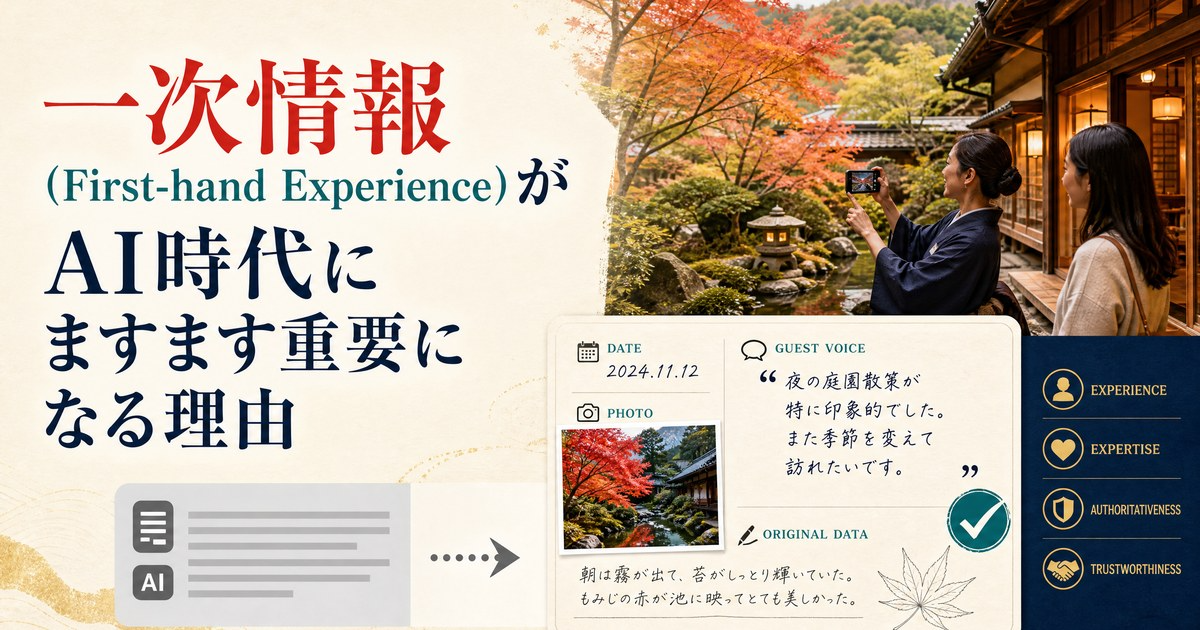
As discussed in our article on how AI tools like ChatGPT and Perplexity can introduce your ryokan, Google has officially emphasized the importance of first-hand information (information based on actual experiences) in the age of AI search. This article delves into why first-hand information is gaining such prominence and how it can be effectively utilized on ryokan websites.
Why First-hand Information is Becoming More Important in the AI Era
With the rise of generative AI, anyone can easily produce large volumes of seemingly relevant text. Consequently, the web is flooded with generic and bland information, diminishing the value of such content. In contrast, information that can only be conveyed by someone who has been there—such as descriptions of sights seen, moments experienced, and specific anecdotes from personal involvement—has become invaluable and irreplaceable, as it cannot be generated by AI.
This shift highlights the increasing significance of the "Experience" aspect within the E-E-A-T framework (Experience, Expertise, Authoritativeness, Trustworthiness) that search engines have prioritized for years.
What Exactly is First-hand Information?
First-hand information refers to facts based on direct experiences rather than hearsay or general opinions. On ryokan websites, the following types of content qualify as first-hand information:
- Memorable stories from the innkeeper or staff based on their actual experiences
- Authentic testimonials and experiences shared by guests who have stayed at the ryokan
- Observations of the garden or surrounding scenery seen with one's own eyes throughout the seasons
- Unique data specific to your ryokan, as discussed in our article on how statistics can increase citation rates
How to Incorporate First-hand Information into Your Content
Utilize First-person Narratives
Instead of stating, "This area's autumn leaves are generally considered beautiful," try saying, "Last week, when I walked through the garden, I noticed the leaves were just starting to change color." This first-person account conveys that the information is based on actual experience.
Support with Photos and Videos
Written testimonials become more compelling when combined with photos or videos taken during the experience. Visual content that conveys real-life experiences, as discussed in our article on creating content for overseas guests on Instagram and TikTok, enhances the value of first-hand information.
Specify Dates and Context
Rather than making general statements like, "It is beautiful every year," provide specifics such as, "When I visited in early November 2026, the leaves were at their peak." This adds credibility and persuasiveness to the information as first-hand content.
What to Do If You Feel Creating First-hand Information is Challenging
Even if large-scale interviews or photo shoots are not feasible, there are numerous opportunities to gather first-hand information naturally through daily operations. By gradually turning everyday stories from the innkeeper or staff into content, as mentioned in our guide on delivering traditional cultural experiences (like tea ceremonies and kimono) to international audiences, you can create valuable first-hand information without overwhelming effort.
Conclusion: From "Information Anyone Can Write" to "Information Only We Can Share"
As AI makes it easier to generate generic information, the value of first-hand information—only available from those who have genuinely experienced it—has never been higher. We recommend reviewing your existing content to identify any areas that may still rely on general statements.
Studio HAKO's HAKO Scan offers a free assessment of your website's international readiness, including the uniqueness of your content. Start by checking your current status.