
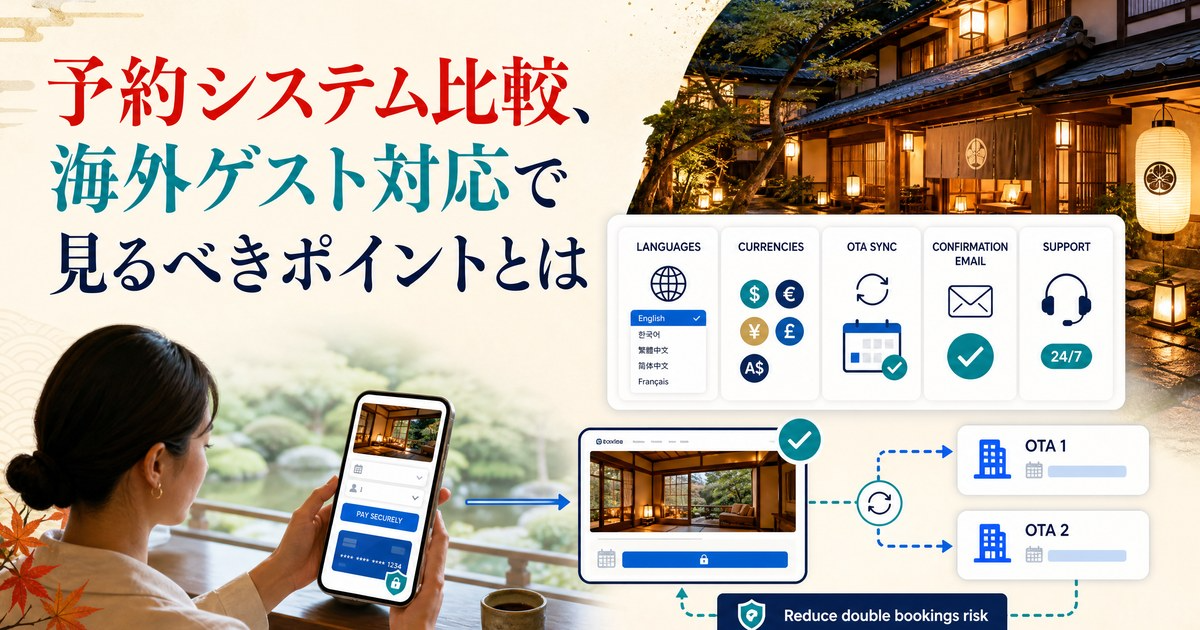
In our previous article, "Why Traditional Phone Reservations Should Transition to Online Booking," we discussed the significance of online booking pathways. When it comes time to implement a system, the number of domestic accommodation reservation systems can be overwhelming, leaving many unsure of which to choose. This article organizes key points to consider when comparing reservation systems from the perspective of catering to international guests.
Five Key Points to Consider When Comparing Systems
1. Number of Supported Languages
The number of languages supported by different systems can vary significantly. Check whether the system supports only English or includes multiple languages such as Chinese and Korean. As highlighted earlier, the primary inbound markets are not limited to English-speaking countries, making the range of supported languages a crucial selection criterion.
2. Supported Currencies and Payment Methods
Ensure that the system accommodates international credit cards and displays prices in multiple currencies. It’s essential to have user-friendly payment features for international guests. The information shared in "Pitfalls of Credit Card Payments and Payment Methods in English" can serve as a checklist during your system selection process.
3. Integration with Site Controllers and Channel Managers
It’s important to verify whether your reservation system can smoothly integrate with inventory management systems like Booking.com and Agoda. In Japan, site controllers (channel managers) that manage inventory and pricing across multiple OTAs are widely used. Confirming that your reservation engine can connect with these systems can help reduce the risk of double bookings.
4. Automatic Confirmation Emails in Multiple Languages
A frequently overlooked aspect is whether confirmation emails sent after booking are automatically dispatched in the guest's chosen language. As discussed in "The Moment International Guests Abandon Their Booking," not receiving a confirmation after booking can be a significant source of anxiety for guests.
5. Multilingual Support System
In addition to the system’s multilingual capabilities, consider whether support during implementation and operation is available in languages other than Japanese, such as English. This can greatly affect the ease of actual operations.
Trends by System Type
Domestic accommodation reservation systems can be broadly categorized into the following types, each with its strengths. Evaluate them based on your specific situation:
- Dedicated In-House Booking Engine: This type emphasizes completing bookings on your own website. Some services focus on multilingual and multi-currency support to attract inbound demand.
- PMS (Property Management System) + Integrated Check-In: This type covers not only reservation management but also self-check-in and guest apps that support multiple languages, enhancing the overall guest experience.
- Site Controller / Channel Manager: A system that manages inventory and pricing across multiple OTAs. Some services with a high domestic market share have proven integration with over 60 OTAs both domestically and internationally.
Practical Points to Confirm Before Implementation
- Compatibility with Existing OTA Operations: If you are already listed on multiple OTAs, ensure that the system you choose can integrate with those OTAs.
- Conduct a Test Reservation in English: It’s advisable to test the reservation process in English to check the format of addresses and phone numbers, as discussed in "Top 5 Reasons for High Drop-off Rates on English Booking Forms."
- Always Verify Pricing Structures on Official Websites: In addition to initial and monthly fees, some systems may charge based on the number of reservations. The optimal pricing structure can vary based on your scale and operational policies, so always check the latest information on each company’s official website.
Conclusion: Identify the Essential Elements for Catering to International Guests
When choosing a reservation system, it’s vital to assess not just the abundance of features but also how well the system aligns with the language, currency, and OTA integration needs of the international guests you currently host or wish to attract in the future. Use the points outlined above to compare multiple systems effectively.
Studio HAKO’s HAKO Scan offers a free assessment of your site’s international readiness, including the booking pathway. Start by evaluating your current situation today.