
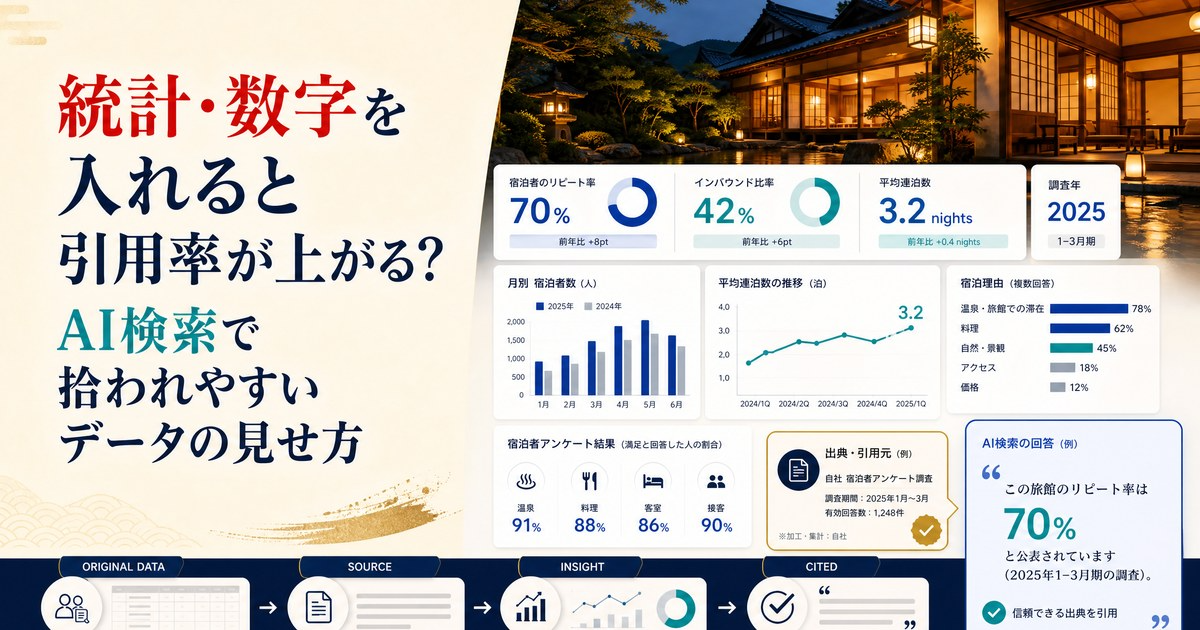
When considering the question, "What commonalities exist among content that is cited by AI?" several studies have already identified specific trends. A consistent finding is the presence of statistics, numbers, and unique data. This article explores how these research results can be applied to enhance content on ryokan websites.
The Relationship Between Statistical Data and AI Citations
Research teams from Princeton University and Georgia Tech have reported that adding statistical data to text significantly enhances visibility (and citation likelihood) in AI searches. Similarly, clearly citing sources and quoting expert opinions also contribute to improved visibility.
Another study by Search Engine Land found that over half of the content cited by AI included "original or unique data." This is a notably high percentage compared to the overall occurrence of original data in general web content. Multiple studies consistently show that specific numbers that are unique to a source are more likely to be referenced by AI than generic information.
Why AI Prefers Numbers and Statistics
AI search engines prioritize presenting specific and verifiable information in response to user queries. Concrete figures, such as "approximately 70% of our guests visit for the hot springs," are treated as more meaningful information by AI and readers alike, compared to vague statements like "many customers are satisfied."
How to Create Unique Data for Your Ryokan Website
Utilize Your Own Data Within Publicly Shareable Limits
Data such as the ratio of guests by nationality, repeat visitor rates, and average length of stay can serve as unique content, provided it respects privacy considerations.
Combine with Local Tourism Data
By integrating local peak season data and tourism statistics with your ryokan's information, as discussed in our article on the Cherry Blossom and Autumn Leaves Content Update Calendar, you can create distinctive content.
Conduct Simple Unique Surveys
Implementing straightforward surveys for guests (e.g., "What was the purpose of your trip?" or "What surprised you during your stay in Japan?") and publishing the aggregated results as English content is an easy way to generate unique data.
Cite and Summarize Public Data
Accurately citing and summarizing data released by public institutions, as seen in our article on Inbound Tourist Numbers and Their Impact on the Lodging Industry, can also hold value. However, this is not considered "unique data" but rather an introduction to others' data, which may not have as strong a citation effect as original research.
Important Considerations When Presenting Numbers
Avoid Exaggerated or Inaccurate Figures
To maintain credibility, avoid using unfounded exaggerations or unverifiable numbers. It is crucial to clearly state your sources and calculation methods.
Place Important Numbers Early in the Content
Research by SparkToro indicates that many AI citations occur within the first 30% of a page. Ensure that important numbers and conclusions are presented early in the text to avoid them being buried in later sections.
Regularly Update Your Numbers
Content with outdated data is less likely to be cited. Incorporating checks for outdated figures into your monthly review process, as discussed in our article on the Monthly Improvement Cycle for International Marketing, is advisable.
Conclusion: Start by Identifying Unique Numbers for Your Ryokan
Given the research suggesting that including statistics and numbers may favor AI citations, there is significant value in incorporating specific and unique data into your ryokan's website content rather than relying on abstract expressions. Begin by identifying what data you can publicly share from your ryokan.
Studio HAKO's HAKO Scan offers a free assessment of your site's international readiness, including the richness of your content. Start by checking your current status.