
Many hospitality businesses view reviews as merely a means of managing their reputation. However, reviews from international guests are an invaluable asset in the realm of international SEO.
The language used in reviews, the content of responses to those reviews, and the freshness and quantity of reviews all influence how search engines evaluate your business, as well as how potential travelers make their decisions. In this article, we will explore how to leverage TripAdvisor and Google reviews not just for reputation management, but as an integral part of your international SEO strategy.
Why Reviews Matter for International SEO
The Language in Reviews Becomes Search Keywords
The terms used by international guests in their reviews—such as "onsen," "tatami room," "English speaking staff," and "family friendly"—are often the same keywords that other travelers use when searching. Accumulating reviews creates a treasure trove of natural English keywords that your own website may not fully capture.
Fresh and Ongoing Reviews Signal an Active Business
A page filled with old reviews does not convey the same impression as one that consistently receives new reviews. The latter suggests to both search engines and users that your establishment is still operational and continues to be chosen by guests.
Responses to Reviews Contribute to Evaluation and Trust
Responses to reviews are a crucial section that potential guests will read. Thoughtful replies can be just as influential, if not more so, than the reviews themselves in shaping the perceptions of future travelers.
Practical Strategies for Utilizing Reviews
1. Respond to Reviews in English with Care
Make it a point to respond to reviews written in English in the same language. Beyond expressing gratitude, refer specifically to the points mentioned in the review (such as food, rooms, or staff service). This shows that you have engaged with the feedback and builds trust with other readers.
2. Address Improvement Requests Honestly
When responding to lower-rated reviews or requests for improvement, maintain a calm demeanor and demonstrate a commitment to fact-checking and improvement. The quality of your responses to critical reviews can convey your establishment's attitude even more than your responses to positive reviews.
3. Reflect Commonly Used Words in Reviews on Your Website
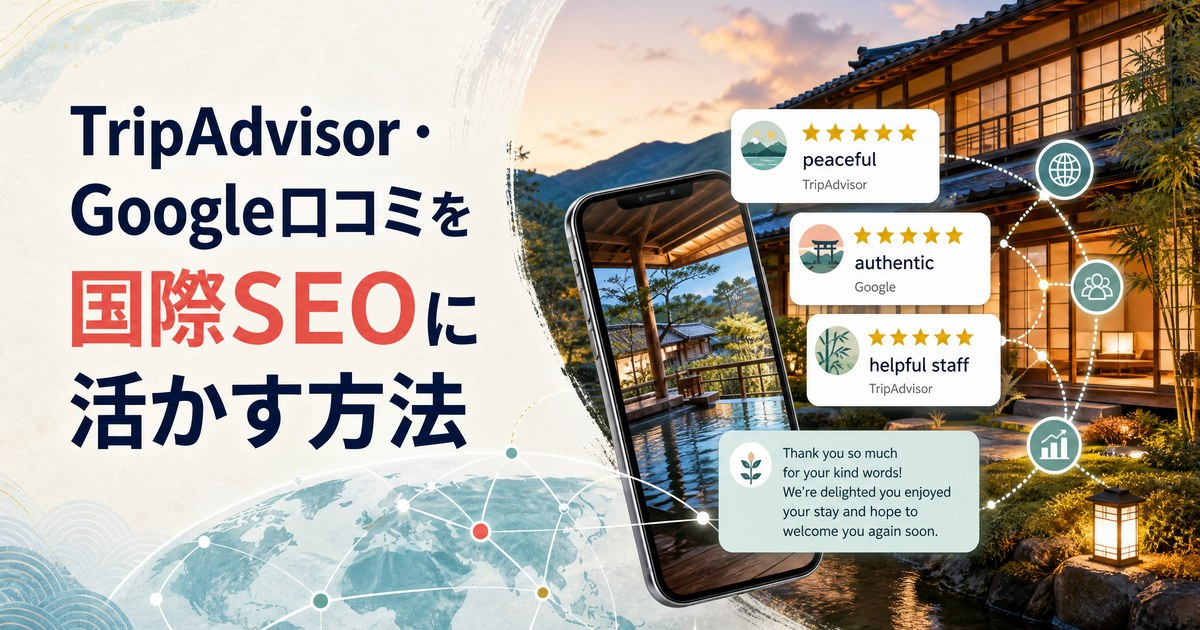
Regularly read TripAdvisor and Google reviews to identify frequently used expressions and praised attributes (e.g., "peaceful," "authentic," "helpful staff"). Incorporate these into your website's English content and FAQ section. This approach aligns keyword selection with actual guest feedback.
4. Quote Positive Reviews on Your Website (with Permission)
By obtaining permission from the reviewer, you can feature impressive English reviews on your website, creating compelling content that showcases third-party validation. Be sure to check TripAdvisor and Google’s terms of use as well.
5. Naturally Encourage Review Submissions at Checkout
For guests who seem highly satisfied, encourage them to leave reviews on TripAdvisor or Google during checkout or in a thank-you email. Establishing a system for consistently gathering new reviews is crucial for improving your search engine evaluation. However, avoid methods that violate platform guidelines, such as offering incentives for reviews.
6. Compensate for Fewer Reviews with Quality Responses
As mentioned in a previous article, smaller, regional accommodations may have fewer reviews overall. Even if you cannot compete with larger establishments in quantity, providing thoughtful responses to each review can leave a strong impression on viewers.
Points to Be Cautious About
- Impersonating reviewers or posting fake reviews can severely damage your credibility if discovered by the platform.
- Avoid relying solely on machine translation for responses; ensure that the English used is natural and coherent.
- Responses that focus on rebuttals or excuses for negative reviews can often backfire.
Conclusion: Reviews Should Be Actively Utilized, Not Just Collected
TripAdvisor and Google reviews should not be seen as a one-time collection effort. Instead, they should be actively leveraged through responses, citations, and keyword integration to enhance your website's overall SEO and build trust. It is essential to recognize that daily engagement with reviews is a part of your international SEO strategy.
At Studio HAKO, our HAKO Scan service offers a free assessment of your website's international readiness, including review management. Start by checking your current status today.