
In a previous article titled '10 Essential English Content Items for Your FAQ Page', we discussed the necessary items to include. In this article, we will delve deeper into the importance of how you write your FAQ, as the way you present the same information can significantly alter the sense of security it provides.
Why Simply Listing Items Is Not Enough
Even if your FAQ page contains all the necessary items, overly formal or vague responses can actually heighten guests' anxiety. For example, if the answer to "Is English-speaking staff available?" is simply "It depends," this does not alleviate any concerns. The goal of an FAQ is not just to answer questions but to encourage guests to take the next step (i.e., make a reservation). It’s crucial to keep this in mind.
The Basic Structure of Reassuring Answers
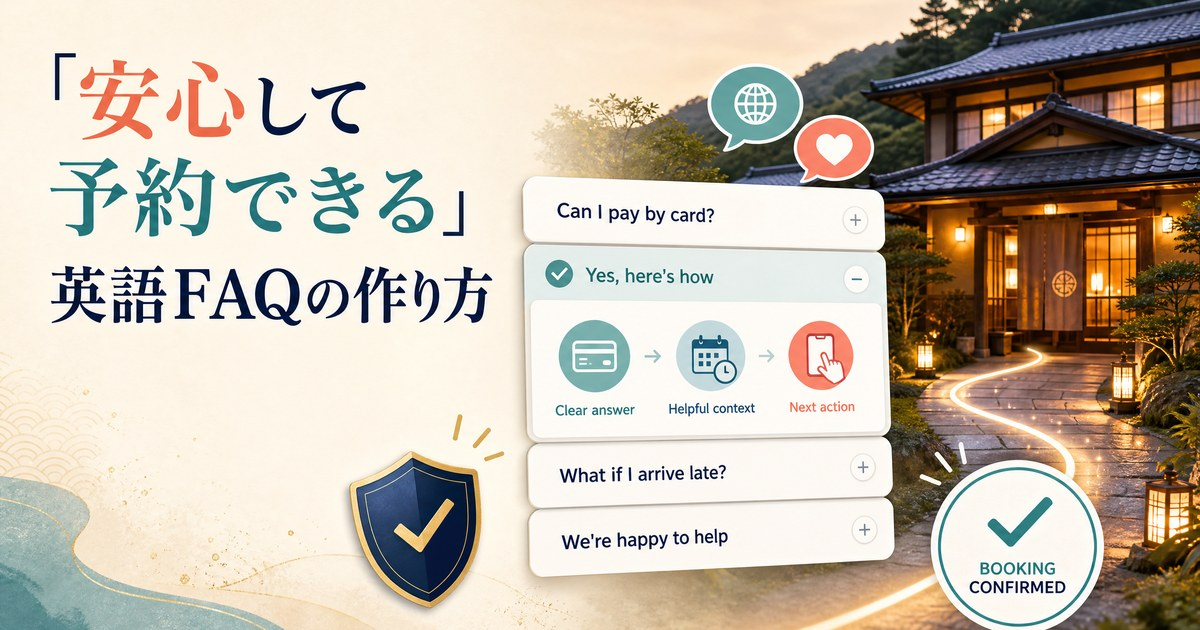
Answers that instill confidence typically consist of three key elements:
- State the conclusion first (Clearly indicate Yes / No / Conditional Yes)
- Briefly explain the reasons or context (Why is this the case? How does it vary by situation?)
- Indicate the next steps (If necessary, explain how to get in touch)
Weak answer example: "It depends on the situation. Please contact us for more information."
Improved answer example: "Yes, in most cases we can accommodate dietary restrictions such as vegetarian or allergy-related requests. Please let us know at least 3 days before your stay so our kitchen team can prepare accordingly. You can contact us via the reservation form or by email."
By first stating "Yes, we can accommodate this," and then providing conditions and actions, guests can confidently assess their own situations.
Write Questions in the Guests' Words
When creating FAQs, it’s easy to frame questions from the facility's perspective. However, aligning the language with the actual concerns of guests can foster empathy.
- Weak example: "About payment methods" (A sterile, item-like question)
- Improved example: "Can I pay with a credit card, or do I need cash?" (A question that reflects the guest's genuine concern)
The more specific the question, the more it reassures guests that others share their doubts.
Anticipate Worst-Case Scenarios
Effective FAQs not only address successful outcomes but also explain what happens if things don’t go as planned.
- "What if I don't have a credit card?"
By preemptively answering such "what if" questions, guests can consider worst-case scenarios while still feeling secure in their decision to book.
Tone: Avoid Being Too Formal, Add a Human Touch
While FAQs are meant to convey information efficiently, a purely bullet-point style can come off as cold. Including phrases like "We're happy to help with any special requests" can transform a list of policies into a reassuring message that there are people ready to assist.
Format: Focus on Readability and Scannability
Many international guests do not read the entire FAQ page but instead search for specific questions. Here are some strategies to help them find the information they need quickly:
- Group questions by category (e.g., reservations, payment, facilities, house rules)
- Use an accordion format (click to expand) to make the page more navigable
- Keep each answer to 3-4 sentences, linking to a separate page for longer responses
Continuously Update Based on Actual Inquiry Data
An FAQ is not a one-time task; it should evolve by regularly reviewing questions received via email, phone, or reviews. Adding and updating frequently asked questions will help create a more relevant and reassuring FAQ.
Before/After: The Difference in Overall Impression
Before (Formal Listing): "Check-in: 15:00. Check-out: 10:00. Cancellation fees may apply. Payment: cash or credit card."
After (Reassuring Structure): "Check-in is from 3:00 PM, and check-out is by 10:00 AM. If you'd like to arrive earlier, we're happy to store your luggage in advance — just let us know. For cancellations, please see our cancellation policy page for details. We accept both cash and major credit cards (Visa, Mastercard, JCB)."
Even with the same amount of information, the latter leaves a more positive impression of being accommodating.
Conclusion: FAQs Should Guide Guests to Confidence, Not Just Provide Information
When creating your FAQ page, it’s essential to focus not only on covering necessary items but also on how well each response alleviates guests' concerns. For a checklist of items to include, refer to '10 Essential English Content Items for Your FAQ Page', and consider revising your writing style as well.
Studio HAKO offers HAKO Scan, which provides a free assessment of your site's international readiness, including the effectiveness of your FAQ content. Start by checking your current status today.