
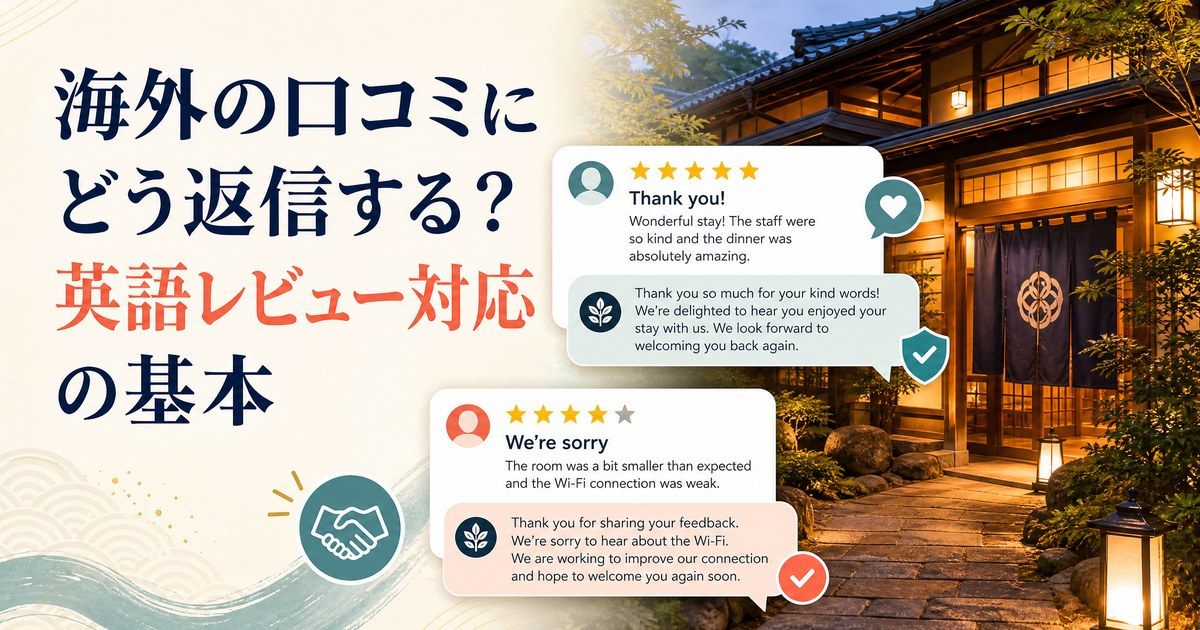
In our previous article, How to Leverage TripAdvisor and Google Reviews for International SEO, we discussed how responding to reviews is directly linked to international SEO and building trust. In this article, we will delve into the often-challenging aspect of "how to actually respond", breaking it down by review type and situation. We will provide example phrases that can be used as templates, which you can adapt to fit your specific circumstances.
Basic Principles of Response: Tone, Speed, Personalization
Before diving into specific examples, let’s establish three common principles that should guide all responses.
Tone: Aim for polite yet natural English that isn’t overly formal. Excessively stiff language can create a sense of distance.
Speed: Ideally, respond within 1-2 weeks of the review being posted. Delayed responses can give the impression that the feedback is being ignored or undervalued. If immediate responses to all reviews are not feasible, consider prioritizing them (for instance, addressing negative reviews first).
Personalization: Responses that only include generic phrases like "Thank you for your review" can come off as copy-pasted. Referencing specific details mentioned in the review (such as the room, meals, or staff interactions) conveys that you have genuinely read the feedback.
Responding to Positive Reviews
While responding to positive reviews may seem straightforward, it’s important to go beyond generic replies. Adding specific mentions and inviting guests to return can make your response more effective.
Basic Structure:
- Express gratitude
- Reference specific content from the review
- Invite the guest to return or suggest other seasons/plans
Example: "Thank you so much for your wonderful review, [Name]! We're delighted to hear you enjoyed the kaiseki dinner and our onsen. Our team works hard to make each stay special, and your kind words mean a lot to us. We hope to welcome you back, perhaps during autumn when the leaves change color around our property."
Responding to Negative Reviews: A 5-Step Approach
Addressing negative reviews is crucial as they are often the most visible to other potential guests and reflect the establishment's attitude. It’s essential to avoid emotional rebuttals or excessive excuses. Instead, consider structuring your response using the following five steps:
- Acknowledge and Thank (Regardless of the criticism, start by thanking the reviewer for their feedback)
- Express Apology (Apologize for any discomfort caused, but be cautious not to overly admit fault before confirming the facts)
- Explain the Facts (If necessary, provide a brief explanation of the situation's context. Keep it factual and concise to avoid sounding like an excuse)
- Show Commitment to Improvement (Clearly outline how you plan to address the issue moving forward)
- Invite for Individual Follow-Up (Encourage the reviewer to reach out directly for further discussion, rather than in a public forum)
Example: "Thank you for taking the time to share your feedback. We're sorry to hear that your experience did not meet your expectations, particularly regarding the check-in process. We take this seriously and are reviewing our procedures with our front desk team to prevent this from happening again. If you're open to it, we'd welcome the opportunity to discuss this further — please feel free to contact us directly at [email address]."
Template Examples for Specific Cases
Complaints About Language Barriers
"We appreciate your honest feedback about the language barrier during your stay. We're currently working to improve our English signage and staff training. In the meantime, please know that translation tools and our English FAQ page are available to assist future guests."
Concerns About Cleanliness
"Thank you for bringing this to our attention. Cleanliness is a top priority for us, and we're sorry we fell short during your visit. We've shared your feedback directly with our housekeeping team and have reinforced our inspection procedures."
Complaints About Pricing and Value
"We appreciate your feedback regarding the value of your stay. Our rates reflect the quality of our seasonal kaiseki dinners and private onsen facilities, but we understand this may not have matched your expectations, and we take that seriously."
In addressing concerns about pricing, it’s effective to convey the value behind the cost without arguing against the reviewer’s feelings.
Complaints About Staff Interaction
"We're sorry to hear that your interaction with our staff did not reflect the level of hospitality we aim to provide. We've discussed this feedback with our team and are committed to ensuring every guest feels welcomed and respected."
Mixed Reviews Highlighting Both Positives and Negatives
"Thank you for your detailed review. We're so glad you enjoyed the onsen and the surrounding scenery, and we appreciate your honest feedback about the breakfast options. We're always looking to improve, and we'll share your comments with our kitchen team."
By addressing both the positive and negative aspects specifically, you create a balanced and sincere response.
Be Aware of Platform Differences
Google Reviews: These are prominently displayed in search results and on Google Maps, making them highly visible to potential guests. Concise and easy-to-read responses are particularly important here.
TripAdvisor: Visitors often read reviews during the planning stage for comparison, so slightly more detailed explanations are acceptable. However, avoid overly lengthy replies that may become cumbersome to read.
Responses to Avoid
- Focusing on Rebuttals or Excuses: While fact-checking is necessary, responses that solely defend your position can backfire.
- Using Emotional Language: Responses lacking calmness can leave a negative impression on other readers.
- Relying Solely on Generic Templates: Copy-pasted responses fail to convey sincerity.
- Easily Admitting Legal or Financial Responsibility: If uncertain, it’s advisable to unify your internal response policy beforehand.
- Requesting Review Deletion in Public Comments: If there’s a violation of guidelines, use the official application process for each platform.
Establish an Internal Response Workflow
Leaving review responses solely to the discretion of one individual can lead to inconsistencies in quality and speed. Establishing a simple workflow can help maintain high-quality responses:
- Who will draft the initial response?
- Will negative reviews be reviewed by a supervisor before posting?
- What is the target response time (e.g., how many days after the post)?
- Share templates for common cases internally.
Conclusion: Responding to Reviews is an Opportunity for Trust Building
Responding to reviews, especially negative ones, can often feel defensive. However, it is actually one of the most persuasive opportunities to build trust with potential guests considering a reservation. We encourage you to cultivate a culture of sincere responses using your own words, based on the templates provided in this article.
Studio HAKO's HAKO Scan offers a free assessment of your site's international response capabilities, including review management. Start by checking your current status today.