
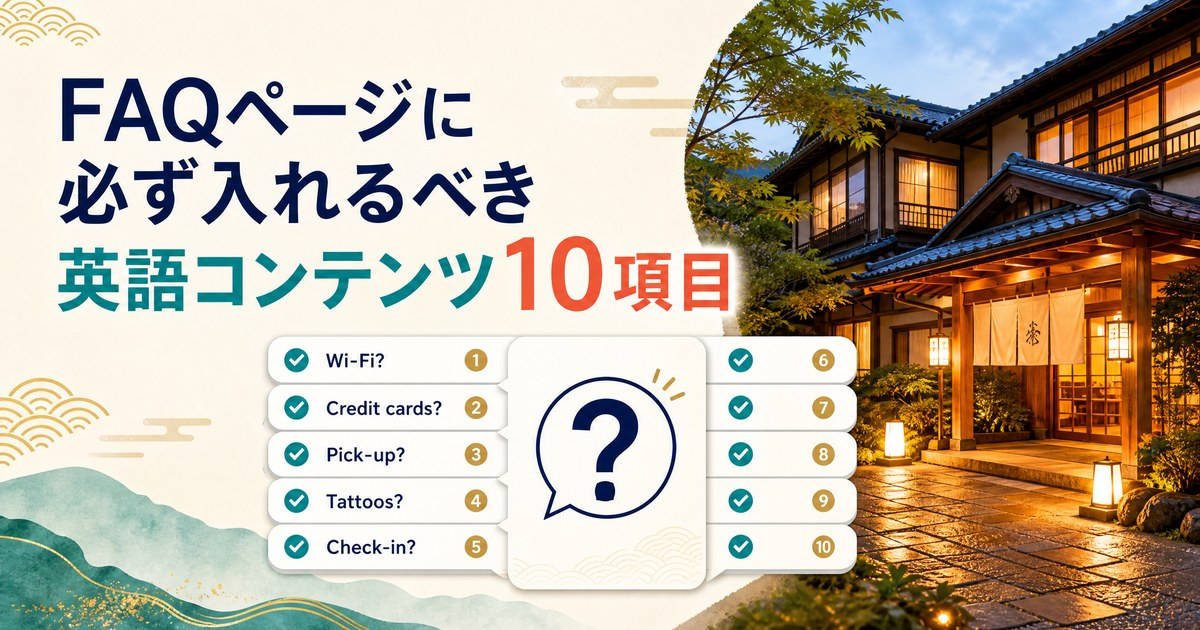
International guests often have different questions and concerns compared to Japanese guests before making a reservation. Questions like, "Is English spoken?" and "What are the rules for the public bath?" can deter potential guests from booking if not addressed on your website.
An English FAQ page is crucial for alleviating these concerns, helping to build trust and reducing the burden on staff handling inquiries. In this article, we will introduce 10 essential items to include in the English FAQ page for ryokans and inns.
Why is an FAQ Page Especially Important for International Guests?
While Japanese guests may feel comfortable making inquiries over the phone, international guests often face a higher barrier due to language differences. If their questions can be answered on the FAQ page, they are more likely to proceed with their booking. Conversely, if their questions remain unanswered, they may leave without even reaching out for clarification. Thus, the FAQ page is not just supplementary information; it is a critical touchpoint that directly impacts booking rates.
10 Essential English Content Items to Include
1. Is English-speaking staff available?
Clearly communicate the level of English proficiency among your staff (e.g., basic conversation skills, full-time English support). This helps manage expectations and alleviate concerns.
2. Is Wi-Fi available?
Specify whether Wi-Fi is available in guest rooms and common areas, and indicate whether it is free or paid.
3. Do you accept credit cards?
List the accepted credit card brands (e.g., Visa, Mastercard) and mention if there are situations where only cash is accepted (e.g., facility usage fees).
4. Do you offer a pick-up service from the station?
Detail whether a pick-up service is available, if a reservation is required, and specify which stations and time slots are covered.
5. Can you accommodate food allergies or dietary restrictions?
Clarify whether you can cater to vegetarians, religious dietary restrictions, and food allergies, and whether prior notification is necessary.
6. Are tattoos allowed in the communal bath?
Explain the rules regarding tattoos, whether swimwear is permitted, and if private baths are available, along with cultural context.
7. What time is check-in and check-out? Can I request a late check-out?
Provide the standard check-in and check-out times, along with conditions and any additional fees for late check-out.
8. What is your cancellation policy?
As discussed in a separate article, it is important to clarify the cancellation policy, including the relevant date and time zone.
9. Can you store my luggage before check-in or after check-out?
If you provide luggage storage or delivery services to the airport or next destination, include the areas served and any associated fees.
10. Is the ryokan suitable for children? Are pets allowed?
Mention any child-friendly amenities (e.g., toiletries, meal options) and whether pets are allowed in certain rooms.
Three Tips for Creating Your FAQ Page
- Reflect actual inquiries: Review past questions from guests (via email, phone, or reviews) and prioritize the most common inquiries.
- Avoid vague answers: Instead of ending responses with "it depends," provide specific conditions and contact information.
- Regularly review: Update the FAQ page as needed, especially for seasonal changes (e.g., shuttle service times).
Conclusion: FAQs Are Not Just Common Questions, But a Booking Support Tool
An FAQ page is not merely a list of questions and answers; it serves as a crucial tool to help international guests feel confident in proceeding with their reservations. Based on the 10 items above, consider adding unique questions related to your inn (such as local attractions or facilities) to develop a distinctive FAQ page.
Studio HAKO's HAKO Scan offers a free assessment of your website's international readiness, including the effectiveness of your FAQ page. Start by checking your current status today.