
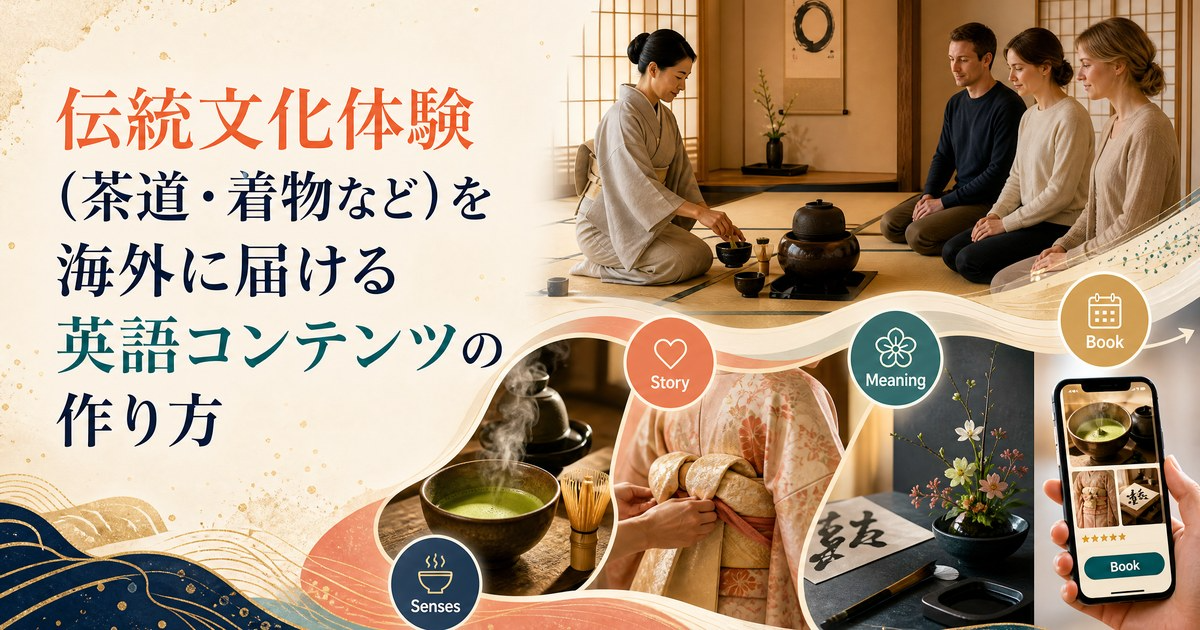
Tea ceremonies, kimono experiences, calligraphy, and flower arrangement—these traditional Japanese cultural experiences are highly sought after by international travelers. However, when trying to convey their charm in English, a mere "description of the experience" often fails to capture the inherent depth and spirituality. In this article, we will explain how to create English content that accurately delivers the value of traditional cultural experiences to overseas travelers.
Why Is It Particularly Difficult to Explain Traditional Cultural Experiences?
Terms related to accommodations, such as "tatami room" or "large communal bath," also require cultural explanations. However, traditional cultural experiences like tea ceremonies and kimono wearing go beyond simply describing a "thing" or a "place." They require an understanding of the underlying philosophies and spirituality to convey their true value. For instance, the concept of "ichi-go ichi-e" in tea ceremonies cannot be fully expressed by simply translating it as "one time, one meeting." It carries the deeper meaning of hosting someone with the mindset that this moment will never occur again.
Four Principles for Creating Engaging English Content
1. Tell the Story of the Experience Flow Rather Than Just Explaining Words
Simply stating, "A tea ceremony is a traditional Japanese art of preparing tea," does not help the reader envision what actually happens. By narrating the flow of the experience—such as the etiquette of entering the room, the movements involved in preparing the tea, and the manners of receiving it—participants can more easily imagine themselves in that setting.
2. Use Descriptions That Appeal to the Five Senses
The aroma of matcha, the texture of the tea bowl, and the sound of water boiling in the quiet—these sensory descriptions go beyond mere information transfer and heighten anticipation for the experience itself.
3. Clearly Communicate the "Emotional Value" Participants Will Gain
Instead of just stating that participants will gain knowledge, emphasize the emotional value they will experience, such as "enjoying a moment of tranquility away from daily life" or "connecting with Japanese aesthetics." This approach resonates more deeply than simply presenting it as a tourist activity.
4. Minimize Technical Terms and Provide Brief Explanations When Necessary
While it is not necessary to explain every cultural background in detail, retaining key terms related to the core of the experience (like "ichi-go ichi-e" and "wabi-sabi") while providing a short explanation allows you to convey both the unique resonance and meaning of these Japanese words.
Before/After: Describing a Tea Ceremony Experience
Before (staying at the level of word explanation): "Tea ceremony is a traditional Japanese activity where matcha tea is prepared and served."
After (conveying the flow of the experience and its spirituality): "Step into a quiet tatami room, where the scent of matcha and the sound of simmering water set the tone for a moment of stillness. Guided by a tea master, you'll learn the deliberate, graceful movements behind each gesture—rooted in the spirit of ichi-go ichi-e, the belief that each gathering is a once-in-a-lifetime encounter, never to be repeated in exactly the same way."
Before/After: Describing a Kimono Experience
Before (staying at the level of word explanation): "You can wear a kimono and take photos in traditional Japanese clothing."
After (conveying the flow of the experience and its meaning): "Be dressed in a kimono by an experienced dresser, who will guide you through the layers, sash, and subtle color choices that reflect Japanese aesthetics. As you walk through the streets in kimono, you'll experience a small taste of how dress itself becomes a form of quiet self-expression in Japanese culture."
Consider Combining with Photos and Videos
No matter how carefully you describe the experience in words, the actual movements and atmosphere of the space are better conveyed through photos and short videos. Especially for experiences where tranquility and beauty of movement are key attractions, combining visual information with text can effectively enhance participants' expectations before they arrive.
Conclusion: Deliver the Meaning of the Experience, Not Just Information
In creating English content for traditional cultural experiences, it is just as important to convey the meaning and spirituality of the experience in a way that resonates with international travelers as it is to provide accurate information. For more on the difference between translation and localization, check out our article on the differences between localization and translation — why it matters for ryokan businesses.
At Studio HAKO, our HAKO Scan service offers a free assessment of how well your site accommodates international audiences, including the clarity of cultural content. Start by checking your current status today.